Rating
9/10
Editor’s Note
The biography of a man who with his sheer power developed and changed the urban landscape of the New York city.
Listening Link
The Broker
The distinguished American journalist-turned-author Robert A. Caro book, ‘The Power Broker; Robert Moses and Fall of New York’ first published in 1974 is about the key figure of Robert Moses who played a central role in the development of the New York city and whose influence remained visible in the urban planning and public policy in the remaining years of 20th century.
The personality of Moses was multidimensional. he knew very well that power and urban governance go side by side. From a politico-reformer to the strong hold on the public projects he became an uncrowned monarch of the New York city.
Let’s Read!!!
The web of power, politics, and urban development are the key components of this book on Robert Moses examinig at the same time also questioning the moral, political, and social valuation of such development.
Early Life
Born on December 18, 1888, in New Haven, Connecticut, to a moneyed Jewish family. His father was by profession was a businessman while his mother was a schoolteacher. Thus an educated and rich family background contributed a positive impact both on his worldview and professional career.
The migration of this family to the New York city was another boosting point for him. His degree in history from the Yale University gave him a keen understanding of the importance of urban development and infrastructure. He met with with some key figures and thinkers both at Yale and Oxford universities further cementing his opinion of the necessity of urban planning and the load of the population explosion on it.
He strongly believed that only through urban planning and development, that is of building parks, centers, bridges, and roads, the sociopolitical life of the individuals could be lifted.
His Rise and Projects and Initiatives
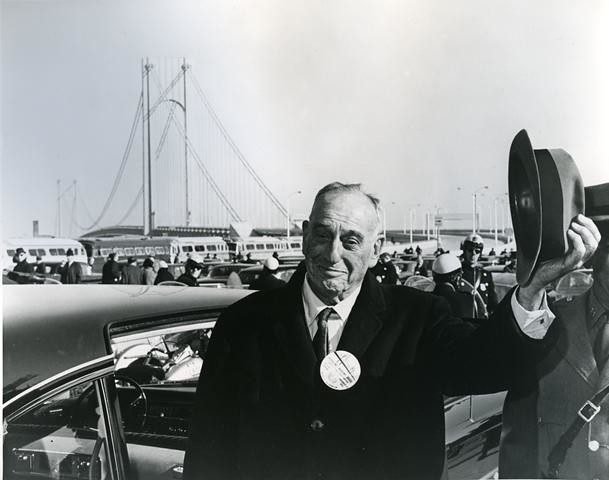
It would not be wrong to call Robert Moses as the architect of the modern New York city. Among the landmark infrastructural projects of him was the Triborough bridge that linked many boroughs with each other and reduced the traffic burden on the city.
The bridge is also known by the name of Robert. F Kennedy Bridge of New York. Another urban architectural yet sociological move was his the development of parks in the city.
He believed that such parks would not only enhance the beauty of the city but also may have a healthy impact on the lives of the city dewellers thus contributing to the social uplift of all. Highways and thoroughfares designs of him carry within themselves a sense of ease and connected both to commuters and motorists alike.
Also Read
The DFR Drive and the West Side Highway symbolized his this philosohpy. These all developments within them carried the essence of sociopolitical and economic growth.
Political Strategy and Influence
The first basic strategy of Moses was the establishment and cementing of relationships with influential political figures. Knowing that his objective could only be achieved via his close ties with these bigwigs. With out whose support all his big projects would only remain on papers!!
An interesting yet to some extent unkown move by him was the tacit and judicious use of the media for his public projection. Making both New Yorkers, media, and all others that he is indispensable for development and beautification of the city.
Also Read
Being a practical man and politico-reformer he was aware that only urban development and media projection is nothing as far as it does not have a solid political realization on the ground. That is a common man support and their votes in the elections, nothing else!!!
Legacy and Controversies
Many criticized Moses for his zeal for urban planning on the basis that such developments had resulted in the displacement of many communities. This displacement caused them loss in social, political, and economic terms.
They accused him that marginalized groups were deliberately targetted for this urban planning. Thus an accusation of Elitism vs Egalitarianism. In which the masses were defeated bybthe the strong ones!!!
Another drawback that is pointed out in his planning is the environmental degradation by these projects. They caused pollution, loss of greenery, with a pressure on amenities of life. Thus giving almost none in comparison to their achievements. A serious ponit, Moses-styled politics became a synonym of autocracy.
Where nobody has nothing to say or do with the socioeconomic or political setup of the city. Moses and planners have all the knowledge, experience, and empathy for the city shutting down any room for outsiders other than them!!!
Power Decline
Robert Moses, a prominent figure in reshaping New York’s infrastructure, experienced a significant decline in influence during the late 1960s. This period marked a substantial shift in political dynamics and public sentiment surrounding urban planning and development.
Initially celebrated for his transformative projects, Moses gradually found himself at odds with the changing priorities of New Yorkers, who began to question the implications of his methods.
The New Yorkers found themselves at the mercy of Moses and his team. They started to question the feasibility and outputs of his plans. The Lower Manhattan Expressway plan was severely questioned by the politicians, activists, and urban planners on the plea that it would uproot thousands of people from this area.
The media projection of Moses was no more acceptable to the city dwellers. Who now did not see a Messiah of the New York City in him. The rise of new urbanism stressed for an all-inclusive and community-based development instead of displacing them.
By the end of 1970s, the glory and power of Robert Moses was fading away giving a lesson to all those involved in the public domain that when they became out-of-reach and cloistered, they decline more quickly than one’s imagines!!!
FAQ on this Memoir
Who is called the uncrowned monarch of New York City?
From a politico-reformer to the strong hold on the public projects, Robert Moses became an uncrowned monarch of the New York city.
When was Robert Moses born?
On December 18, 1888, in New Haven, Connecticut, He was born to a moneyed Jewish family.
What was his philosophy about urban planning?
He strongly believed that only through urban planning and development, the sociopolitical life of the individuals could be lifted.
What was political strategy of Robert Moses for urban planning?
The basic strategy of Moses was the establishment and cementing of relationships with influential political figures.
What were the reasons for Robert Moses power decline?
New Yorkers began to question the implications of his urban planning, politics, and its implementation methods in late 1960s.