Rating
8/10
Editor’s Note
A firsthand and poignant acconut of a soldier who saw blood, bodies, and mud. Both of his fellows and enemies at same time!!
Listening Link
Not Every Classic Deserves the Hype
Honestly speaking, You’ve probably seen Helmet for My Pillow on every “best war memoirs” list out there. It’s been called a masterpiece. A must-read. The definitive Pacific War account. But here’s the thing — a lot of old classics don’t translate well to audio. The writing can feel dated. The pacing drags.
The narrator either overperforms or sounds like they’re reading a grocery list. So I went into this audiobook skeptical. And honestly? That’s probably the right way to approach it.
What You’re Actually Getting Here
Robert Leckie was a 19-year-old kid from New Jersey who joined the Marines after Pearl Harbor. He fought at Guadalcanal, New Britain, and Peleliu. He wrote Helmet for My Pillow in 1957, more than a decade after the war ended. That gap matters — because this isn’t raw, immediate combat writing. It’s a man looking back, trying to make sense of what happened to him.
Let’s Read!!!
The audiobook clocks in at roughly 10–11 hours. That’s a solid week of commuting or a couple of long drives. The narrator handles Leckie’s prose with a gravelly, restrained tone that mostly works. Mostly. There are moments where the delivery feels a little too polished, a little too “radio drama,” and you lose the grit that Leckie is actually describing. But when it lands — during the quiet, exhausted moments between battles — it lands hard.
Why People Still Talk About This Book
Let’s give credit where it’s due. Leckie can write. Not in a flashy way, but in a way that sticks with you. His descriptions of tropical illness, of waiting in a foxhole while the rain turns the ground to soup, of the bizarre, dark humor that keeps Marines from completely losing it — these are the passages that make the audiobook worth the download.
And yes, if you watched HBO’s The Pacific, this is the source material. Leckie’s memoir (along with Eugene Sledge’s With the Old Breed) formed the backbone of that series.
Also Read
If you loved the show and want the unfiltered version — without the Hollywood smoothing — the audiobook delivers. The show actually toned some things down. The book doesn’t.
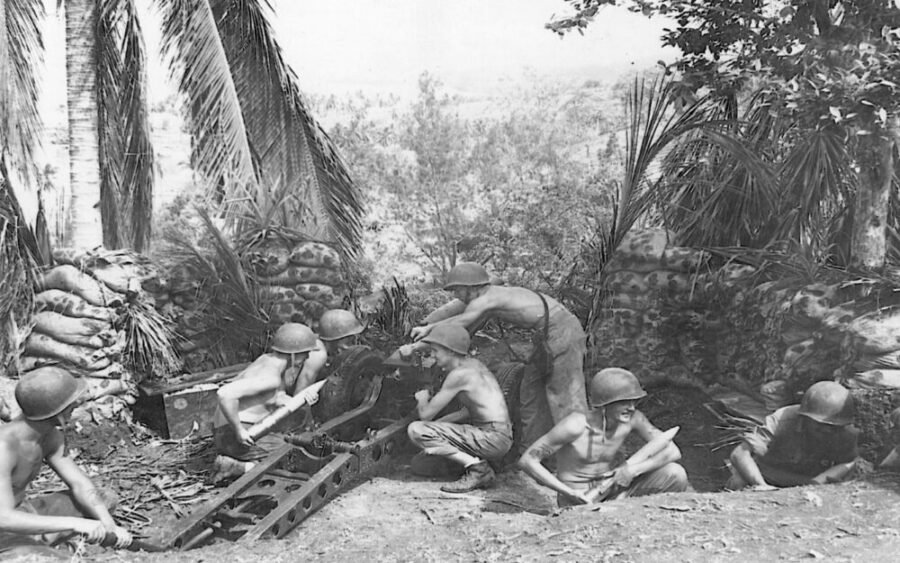
The Pacific Theater perspective is also genuinely valuable. Most WWII media focuses on Europe. D-Day. Patton. The Holocaust. The Pacific War gets treated like a footnote. Leckie’s account reminds you that this was a completely different kind of war — jungle rot, malaria, an enemy that didn’t surrender, islands most Americans had never heard of.
Where This Audiobook Falls Short
Now let’s talk about the problems. Because there are several, and pretending they don’t exist does nobody any favors.
The prose is uneven. Leckie was a talented writer, but he was also a product of his era. Some passages are sharp and modern-feeling. Others get bogged down in 1950s literary flourishes that feel stiff today. The audiobook narrator can’t fix that — and honestly, sometimes the formal delivery makes the stiff passages even harder to sit through.
The pacing is brutal in places. War memoirs have a natural rhythm: chaos, boredom, chaos, boredom. Leckie leans hard into the boredom sections.
There are long stretches where not much happens, and in audio format, you can’t skim. You’re stuck listening to a 20-minute description of a monsoon while you wait for the next battle. That works for some listeners. For others, it’s a test of patience.
It’s not as visceral as you might expect. If you’re coming from modern combat memoirs — think Jarhead, The Yellow Birds, Redeployment — Leckie’s restraint can feel almost old-fashioned. He doesn’t dive deep into PTSD in the way contemporary readers might want.
Also Read
He hints at it. He circles around it. But he never fully opens that door. Whether that’s a flaw or a product of his generation is up to you.
The audio production is serviceable, not exceptional. This isn’t a full-cast performance. There are no sound effects, no musical score, no immersive audio design. It’s a straight narration. For a book about one of the most chaotic, sensory-overloaded wars in history, that feels like a missed opportunity. Compare it to something like the Band of Brothers audiobook adaptations, and it feels a little flat.
Best Listen For Whom?
Let’s be real — this audiobook isn’t for everyone.
Skip it if: You want fast-paced action, modern psychological depth, or flashy audio production. There are better options for pure entertainment.
Listen to it if:
- You’re a military history buff who wants the Pacific perspective that most books ignore.
- You watched The Pacific and want to separate fact from Hollywood fiction.
- You genuinely enjoy slower, more literary memoirs where the writing itself is the point.
- You respect primary sources — this is a real Marine’s real account, not a historian’s interpretation.
- You need a solid 10-hour listen for a long trip and want something with actual weight to it.
The Bottom Line
Is Helmet for My Pillow the best WWII audiobook ever recorded? No. The narration is decent but not groundbreaking. The writing is strong but uneven. The pacing will test some listeners.
But is it important? Absolutely. Is it worth your time if you care about this era, this theater, or this genre? Yes — but go in with the right expectations. This isn’t a thrill ride. It’s a witness statement from a guy who saw things no one should have to see, wrote them down as honestly as he could, and somehow lived to tell the story.
If that sounds like your kind of listen, download it. If you’re looking for something lighter, nobody’s judging you. There are plenty of other audiobooks in the sea.
FAQ on Helmet for My Pillow
Is Helmet for My Pillow is available as an audiobook?
Yes. Helmet for My Pillow by Robert Leckie is available as an unabridged audiobook on many platforms like Audible and Libro.fm.
How was the Pacific War Theater different from the European War Theater?
This Pacific War Theater was completely different from the European War Theater. It was jungle rot, malaria, an enemy that didn’t surrender, islands most Americans had never heard of.
Who was Robert Leckie, the author of, Helmet For My Pillow?
Robert Leckie was a 19-year-old kid from New Jersey who joined the Marines after Pearl Harbor.
What is the best thing about this audiobook, Helmet For My Pillow?
The best thing in this book is that, this is a real fighting Marine’s account of battlefields, not a historian’s interpretation.